
Video Production
Resonate with your targeted audience and generate more engagement with our creative video production. We provide highly effective video contents and affordable services from concept to production that delivers the right message to your audience.

Building Your Brand with
Creative Promotion Video
We create amazing and creative video that’s fun and attractive for your website!

People loves videos
Includes fresh and interesting visual elements that people love which increases web traffic and click-through rates.
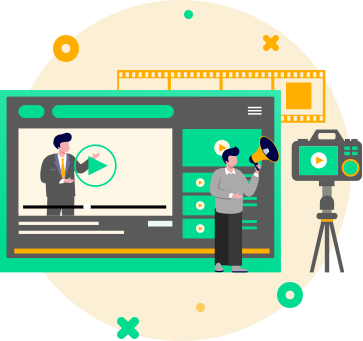
Videos explain EVERYTHING
Explains your business idea in a funny, creative and entertaining way for your customers to understand you well.

Boost Conversion & Sale
Offers more online visibility and brand awareness which grabs audience attention increase in site visits and sales.
Video Samples
Looking for some inspiration? Take a look at our range of work on corporate video production for our clients in Hong Kong. Explore our recent works!
Why Choose Us
As an innovative promo video production company Singapore, Visible One strives for the most engaging way to tell your business’ specific story, delivering the most unique and memorable experiences to your customers.

PROFESSIONAL LOOKING VIDEOS
Our video editing services are second to none. As a business owner, you are not buying a video production – you are buying brand awareness, a professional look to your website and future sales.

FROM CONCEPT TO FINAL VIDEO
Our strong concept and crafty design are at the heart of everything we do. We strive for a harmonious balance between design, emotion and information.

NO HIDDEN COSTS
We can help you boost your sales without spending too much with our affordable and no extra charges yet engaging videos.

CUSTOMER SUPPORT
Our dedicated video maker team offers an ongoing communication to attend to all your needs.
Bring Your Brand Message to Life
We strategize, produce and deliver high-end videos content to give your product, service or business ideas a personality, educating your audience and builds trust with them.
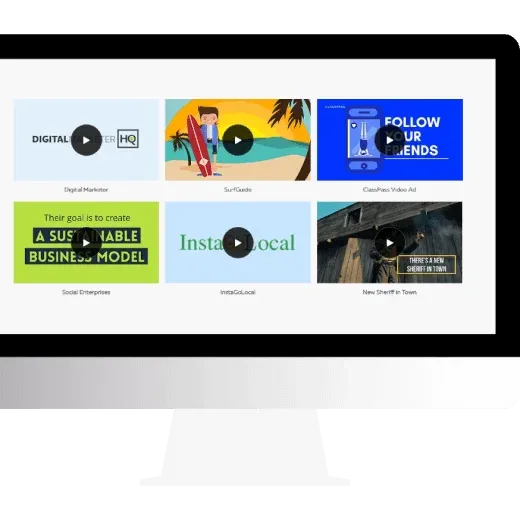
Professional Looking Videos
We use HD quality cameras, cutting-edge technologies and latest trends to create a polished, professional-looking marketing videos that communicate your brand message while impresses your audience.
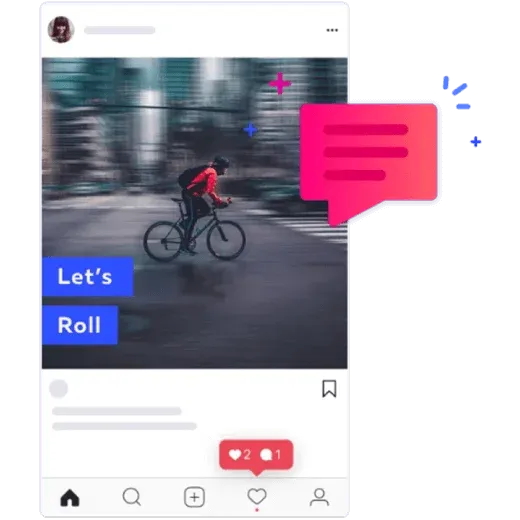
Share Your Videos to Social Networks
A video on your site can make your audience stay longer and engage with your site and allow them to share your brand on social channels which increase brand awareness that lead to increased sales, and a lower ‘bounce rate’.
Video Creation Process
Our video production service is created with a simple and holistic process to produce custom designed solution for your specific need and your audience all backed up by our satisfaction guarantee.


Requirement Analysis
First, we will schedule a meeting with you on your available time and discuss the objectives, budget and target audience of your video and how it will be used after it is finalized. We will let you fill out forms to gather all the information we need for the entire project, and create a proposal to align your expectations, educate each other with different ideas, define the features and scope, timeline, outline cost and duration.

Planning
Using the information we gathered from phase one, it is time to put them together to develop a detailed project plan that helps guide each phase of the project. The plan outlines much better understanding of your business, key deliverable dates and review timeframes and approvals. All these details will help ensure that the production phase of the promo video goes smoothly.

Script Writing And Storyboard
In this stage, we craft a script and storyboard (a rough drawn mockup of an idea) to serve as the master plan for the project. We write the script and create the storyboard ourselves in the first instance and make changes in the second version according to your suggestions. Any amends required are discussed and changed until the script and storyboard is approved and we can move to the next stage.

Development
The next step is to create the final idea to life. Our team will start to combine the script and storyboard and add graphics, animations and special effects to enhance the impact of the video. While sound mixing and editing is done to create the audio tracks. Music will either be selected by us or custom music is composed and recorded if required.

Video Editing
After the production phase is finished, our promotion video production team will begin the polish all the details and process to organize and edit the actual video to ensure the video conveys the right message and has an emotional impact on the audience. After that, the final product will be thoroughly checked before sending to you for approval.

Reviews/Approvals
After editing, we send it over to you to let you watch the video and make comments. We build in several rounds of revisions for our clients. We recognize the investment our clients make in video production, so we want to make sure we get it right. Assuming there are some changes that are needed to be done, the revision process can begin.

Final Delivery
Once the video is finalized and approved, the final version of the video is then delivered to the client. We can develop all the file formats you’ll need for a specific type of distribution. If you need files for your site, YouTube or another platform, we’re experts in handling the encoding process, you just have to communicate that with our team.
Convey messages & illustrate complex
ideas with a fun & great videos today
WHY USE VIDEOS
Video that are focused on your bottom line is one of the best ways to engage, and inform your audience. Videos takes your business to the next level!
-
 Marketers who use videos grow revenue 49% faster than those who don’t.
-
Video boosts traffic from search engines 157%.
-
Landing pages with videos increase conversions 80%.
-
Videos in emails increase click-through rates 200-300%.
-
Users spend 88% more time on websites with video.
-
73% of B2B marketers report positive video ROI.

FAQ
-
Yes. We offer a free consultation with you to have a better understanding of your needs and wants. We will also explain to you our video production process and provide you the different types of videos we create for you to choose from.
-
Yes. We edit video shot by you. You just have to provide us the editable footage and we will do the editing.
-
We shoot using our HD quality cameras. We use applications to provide a high-quality videos in MPEG4 format, .avi, .webm and other formats that are suitable for your needs.
-
Basically, as soon as possible especially if the project is rush. You can book one week in advance so there will be more time for pre-production and revisions.
-
The length of time it can take to produce a film can vary, however we do have a fast track option, should there be a tight deadline that needs meeting. Typically, if the project is rush, a short video can be created in 3 days. Our video creator can do it in 1 day and another 1 day for revisions. Once approved, we will furnish the finish product and we can market the video on your website or YouTube if you prefer.
-
Yes, but for the most part, you need to tell us during the consultation so that we can plan accordingly. When we quote, we generally quote for one language and then quote as additional work for the other language versions.
-
We will communicate with every step of the process via email or WhatsApp. We will always ask for your feedback and if you have any revisions, we do them accordingly. After the production process, we will send the video project to you for approval.
-
Of course! We always keep back-ups of all our projects and can supply a replacement by file transfer free of charge.
-
Our video production cost depends on your requirements from basic video to premium video. You may contact us for a free quotation and know more about our price range.
-
We accept instant bank transfer or payment via PayPal. Payment details are provided on the invoice.
If you have a project and would like to discuss it with us, then please do call us or email us using the form below.